

The Autopsy That Couldn’t Name the Body
We Wrote a 192-Page Autopsy and Couldn’t Admit What Killed Us

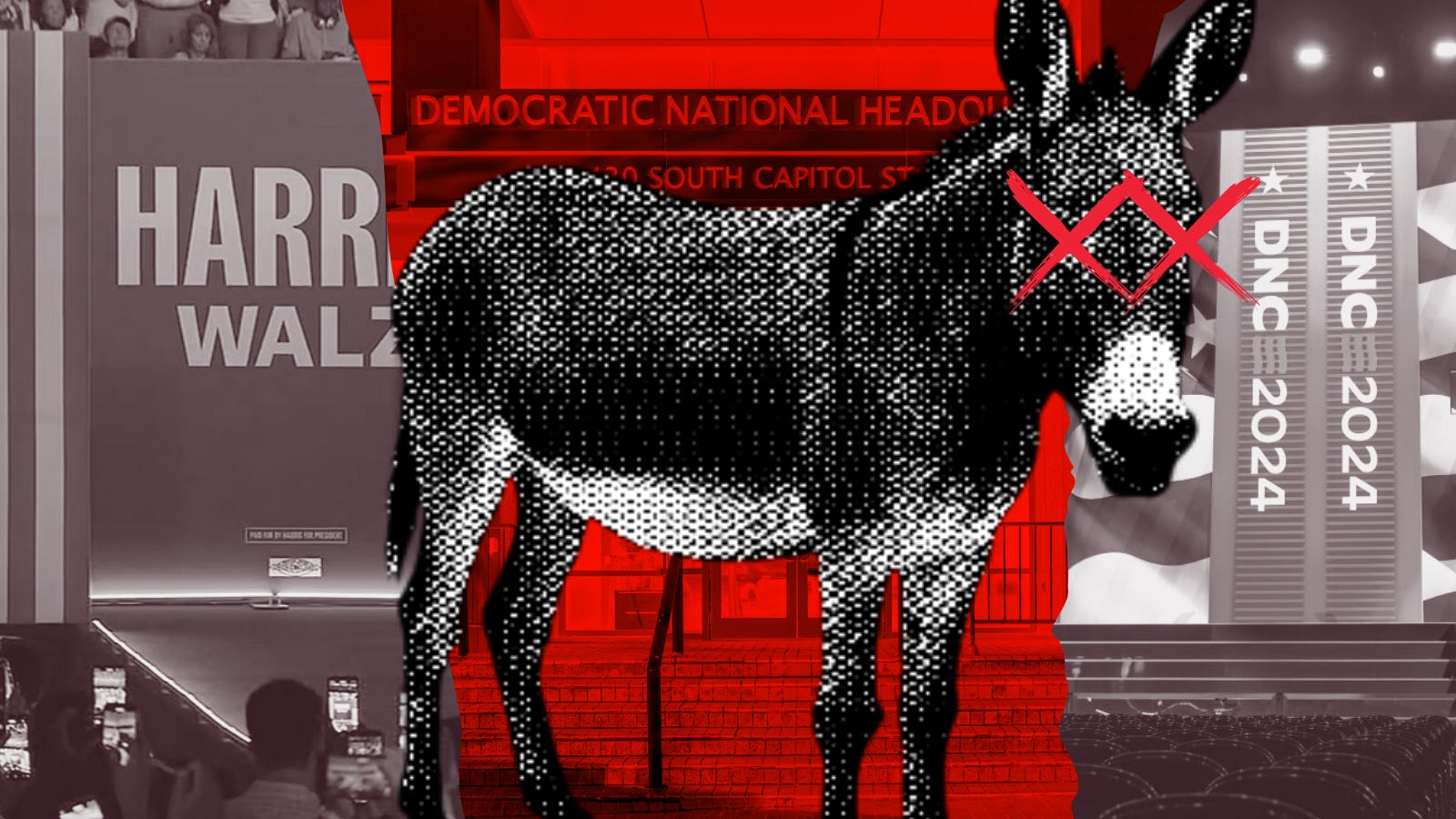
The DNC released its 2024 autopsy this week. One hundred and ninety-two pages. Mentions of Gaza: zero. Mentions of Biden’s age: zero. Substantive discussion of affordability: one parenthetical.
The real scandal shouldn’t just be that Gaza wasn’t in the autopsy. It should be why the obvious factors weren’t in there at all.
You do not leave out the genocide, the age question, and the cost of living across 192 pages by mistake. You leave them out on purpose, because naming them would mean admitting we got them wrong. Cycle after cycle, Dems look at our losses through a lens so myopic we can’t seem to see why we lost, when it’s in bold letters in front of us. And admitting we got something wrong is the one thing modern politics has decided it cannot survive.
That is the actual story here. Not Gaza specifically. Not Biden’s age specifically. The story is that we have built a politics so terrified of looking weak that it would rather produce a 192-page document explaining nothing than write a single honest page that costs someone face. And once you see that instinct, you see it everywhere. In who we elevate. In who we chase. In what we refuse to admit. In how we refuse to fight. It is the same disease, over and over, and the autopsy is just its latest and most expensive symptom.
This is the throughline I have been writing about for a year, so let me put all of it in one place.
We already ran this experiment. It was called Future Forward.
If you want to know what the save-face instinct looks like when it has a billion dollars, look at Future Forward.
Future Forward was the super PAC anointed by Biden’s campaign and inherited by Harris, the chosen vehicle for the party’s biggest donors. Senior White House adviser Anita Dunn told the New York Times it had “really earned its place as the pre-eminent super PAC” of the 2024 effort. That blessing came with a message to donors: give to Future Forward, and only Future Forward. It raised close to a billion dollars across the PAC and its nonprofit arm. It sold those donors on a theory: that persuasion advertising decays over time, so you hold your money and dump it all at the end, after testing every ad to death. In the first five months of 2024, while the main pro-Trump super PAC spent nearly $27 million defining the race, Future Forward spent about $83,000. It put roughly three-quarters of its ad money into the field after Labor Day.
The anointment is the part that should bother us most, because it built a body accountable to no one. One Democrat involved in the outside-group world described the attitude in a single quote: “They’re anointed and they have a s- load of money, so they don’t need other people. They think they have it all figured out. They have the keys and they’re not using them.” When you are the chosen vehicle, when donors are told to route everything through you, when your relationships with the people at the top mean nobody can overrule you, there is no mechanism left to tell you that you are wrong. You have built a machine that cannot receive bad news.
People warned them anyway. All year. In real time. The groups closest to the voters we needed begged for air cover and got turned away. Adrianne Shropshire, who runs BlackPAC, put it plainly: “We were getting punched in the mouth from the beginning of the year, and there was no response.” Quentin James of the Collective PAC said the maddening part wasn’t the money, it was the gaslighting. He says he told them to engage voters of color earlier, and they told him their testing showed the strategy was working. His question is the whole ballgame: “Why are the red flags we are raising not coming up in your testing, or is it you are ignoring them?”
That is not a fundraising problem or a math problem. That is the PR instinct in its purest form: an operation so in love with its own model and its own image of competence that when the people on the ground told them it was failing, they pointed at the data and said the data disagreed. They ran the largest Spanish-language ad campaign of the cycle, $30 million, and started it in October, and it still wasn’t enough, and Trump gained with Latino voters anyway. They produced more than twenty ads for every one that aired. One Democrat called it Moneyball without Billy Beane. They refused to spend defining Trump as a villain because their testing said negative ads underperformed, and the Trump campaign spent the year repairing his image while we sat on the money.
And here is the part that should make every one of us uncomfortable, because it is not about what they did but about what we are. We are the party that calls dark money a threat to democracy. Biden said it himself, repeatedly, that dark money erodes public trust. Future Forward raised the bulk of its money through a nonprofit affiliate that does not disclose a single donor. In 2023 the operation pulled in roughly $208 million, and the disclosing super PAC reported only about $25 million of it. The rest came through the dark we say we are against. We ran one of the largest dark-money operations in the history of presidential politics to elect the man who calls dark money a threat to democracy, and then we put out a 192-page autopsy that does not sit with what that means about us. You cannot campaign against a thing you are running on and expect people to believe a word you say.
They lost. And the postmortem on the billion-dollar anointed PAC has been about as honest as the 192-page autopsy, because admitting the chosen vehicle blew it would mean admitting the people running the show were wrong, and that is the one thing we do not do.
We keep chasing voters who were never coming, and ignoring the ones who are already here
Future Forward chased a persuadable middle that kept not showing up. That is not a one-off. It is the organizing principle of the whole modern party, and it is the second face of the same disease.
There are a million ways to make room for fascists the one time they agree with us, but no space for leftists who agree with us ninety percent of the time and are simply asking us to do better. We saw it on the 2024 campaign trail and at the convention, where there was airtime for former Trump staffers and Republican politicians, but when it came time to platform young Democrats, progressive activists, and pro-Palestinian voices, we were suddenly at capacity. The Harris campaign flew Liz Cheney to three states because she opposed Trump through the January 6th investigation, even though she voted with him ninety-three percent of the time in Congress, while making little effort to elevate the progressive members who voted with him zero percent of the time. And what did the gestures to the right get us? Trump earned more Republican votes in 2024 than in 2020, while thousands of voters who should have been in our corner stayed home, feeling forgotten.
This is the Lincoln Project logic, and it has been the most expensive fantasy in Democratic politics for a decade: the belief that a vast, untapped bloc of moderate Republicans is just waiting to abandon Trump, and that only former GOP operatives can unlock them. Democratic donors bought in. The results never materialized. After three Trump elections across more than a decade, the mythical centrist Republican simply does not exist, and yet we keep building billion-dollar operations and convention lineups around the search for him. Future Forward chased him with the money. The convention chased him with the microphone. The result is the same: we court people who want little to do with us while pushing away the people who believe in our values and want us to go further.
Opposing Trump is necessary. It is not sufficient.
The same instinct shows up in who we rush to the front of the line.
Being anti-Trump is a baseline for moral clarity, not a qualification for leadership. But too often the party vaults former Republican operatives to the front simply because they had a late-stage epiphany, while overlooking the people who did the unglamorous work for decades. George Conway runs for Congress as a Democrat. Geoff Duncan runs for governor as a Democrat. Here in Virginia, former Republicans like Barbara Comstock stump for our candidates, the same Barbara Comstock who worked to repeal the Affordable Care Act and spent her career attacking Virginia’s labor force. The pitch in every case is the same: opposition to Trump. Beyond a few buzzwords about affordability or healthcare, there is little evidence of an actual shift in what these people believe.
And the tell is loyalty. When the Jay Jones text-message story broke in Virginia, Never Trumpers like Sarah Longwell and Tim Miller, people who once worked for Jeb Bush and inside Republican power structures, were the first to tell Virginia Democrats to throw our own nominee overboard. At the first bump in the road, the converts wanted to toss the candidate we were supposed to be electing. That is not a loyalty problem with one or two people. It is what happens when you elevate novelty over consistency: you teach the next generation that the fastest path to influence is not organizing or believing in something, it is rebranding. Gratitude for someone leaving the GOP is not the same as deference to their judgment. Welcoming someone into the coalition is not the same as handing them the microphone, the strategy memo, and the leadership mantle on day one.
The Democratic Party is not merely a reactive vehicle designed to oppose one man. We are not a temporary coalition formed in response to a single threat. We are a party with a governing philosophy, a moral framework, and a responsibility to deliver material change to people’s lives. Trumpism exposed the rot in the Republican Party. It did not create it. The attacks on labor, reproductive freedom, voting rights, and economic regulation were all there long before Trump descended the escalator. If someone’s political awakening begins and ends with Trump, that should invite scrutiny, not automatic elevation.
“Heterodoxy” is the permission slip
There is a word that launders all of this into strategy, and the word is heterodoxy. It literally means deviating from the norm, from the set platform of a group. In practice it is a word coopted by DC consultants to tell people in places they have never lived how to run races they will never have to win.
Strip it down and heterodoxy is an excuse not to support the Democratic agenda. It makes it harder for us to define ourselves, harder for any voter to name what we stand for, because it exists to make excuses for moderate and wishy-washy and even contradictory stances on the issues people actually like. And look at who is bringing it to us. Former Republicans. The guy who brought us Fetterman. Do they really have our interest at heart?
The tell is the direction. Heterodoxy never means nominating someone to your left, or platforming the organizer who has been right since 2016. It only ever means moving right and going soft on the stuff people actually like. They describe the voter to prescribe the party.
Politics became public relations, and PR can never be wrong
Step back and the pattern has a name. Somewhere along the way, the job stopped being about governing and started being about image management. Every statement gets run through the same filter: does this make us look strong, competent, in control? Admitting a mistake fails that filter every time. So we stopped admitting mistakes. Not because we stopped making them, but because the PR brain that now runs everything treats an admission of error as a wound to be avoided rather than the first step to fixing anything.
While the Republicans are hell bent on a race to the moral and ethical bottom to get power, Democrats are trying to keep a “good image of competency” rather than actually admit when we mess up or miss things. They never concede a point, and a large chunk of people respect the refusal as strength. Our response has been the worst possible lesson to draw from that. Instead of offering people honesty as the contrast, we decided we needed to look just as unflappable, just as on-message, just as allergic to the words “we were wrong.”
The problem is that voters can smell it. People are not stupid. They can tell when they are being managed instead of leveled with. They have spent a decade watching both parties optimize for the press release, and the result is a country that has stopped believing the press release means anything. When every politician sounds like a brand statement, voters stop trusting the entire process, because a process that can never admit fault is a process that has stopped being accountable to them.
Democrats need to face a reckoning with the fact that we try to save face more than facing the real problems of our party and our country. Only then can we actually start moving our country forward and do the good work we need to do. The erosion isn’t that people disagree with our policies. It’s that they no longer believe anyone in the building is telling them the truth, including when we talk about ourselves.
Weak and right versus strong and wrong
If you want to know what the save-face strategy has bought us, look at where we stand with the people we need.
Congressional Democrats hit an 18 percent job approval rating in Quinnipiac’s December poll. Seventy-three percent disapproved. That is the lowest the number has been since Quinnipiac started asking the question in 2009. The Wall Street Journal put the party’s image at its worst point in over three decades of their polling, with 63 percent of voters saying we are out of touch with the everyday concerns of regular people. Net favorability has hit -32 in some surveys, the lowest for either party going back to at least 1996.
Here is the part that should actually scare anyone running the place: the collapse is loudest among our own. In Quinnipiac’s October poll, 58 percent of Democrats approved of how Democrats in Congress were handling the job. Two months later that number was 42 percent. We lost sixteen points of approval from our own voters in eight weeks. That is not Republicans turning on us. That is the base looking at how we have handled ourselves against Trump and concluding that we look weak, and they are not entirely wrong to see it that way.
This is the thing voters figured out before we did. They see Republicans as strong and wrong, and they see us as weak and right. We may be more intelligent, more compassionate, more aligned with where history lands. None of it matters if we are perceived as people who will not fight. We confuse cleverness for courage. We write speeches about fighting fascism and then fold the second we might upset a donor or lose a polling point. When Trump and Musk gutted the federal workforce, we held rallies and then settled on a strongly worded letter. When they branded their reconciliation bill the One Big Beautiful Bill, the most powerful response leadership could muster was to rename it the Big Ugly Bill, which erased the MAGA fingerprints on it and did nothing to stop it, and it passed anyway. We rolled out a taco cart. We are wagging fingers on Sunday shows and subtweeting the GOP like it is high school while they bulldoze our rights without shame.
The bright spots are the proof of what works. Cory Booker held the floor for twenty-five hours. Chris Van Hollen flew to El Salvador to find a constituent who had been deported without due process. Alex Padilla got tackled and cuffed confronting Secretary Noem. That is what fighting looks like, and it is exactly what the base is starving for. The lesson is not complicated. People will forgive you for losing a fight. They will not forgive you for refusing to have one.
“Affordability” is becoming the new way to say nothing
This is heterodoxy in policy form. Watch what happens when the party does try to talk about cost of living, because it is the same disease wearing a friendlier face.
Affordability is the buzzword of the moment, and everyone has rushed to slap it on something. Senators have rolled out plans to exempt most middle-class households from federal income taxes, big sweeping numbers that sound like exactly what a squeezed family wants to hear. Then you read the fine print. These are regressive. Because higher earners pay steeper rates, they pocket more from a deduction. Under one of these proposals a couple making $100,000 benefits six times as much as a couple making $50,000. We put the word “affordability” on a policy that hands the most help to the people who need it least, and we did it because the word polls well, not because the substance solves anything. That is saying the right thing and missing the actual thing. It is pandering dressed as populism.
And the response to that slop is its own dodge. The centrist wing looks at the same affordability emergency and answers with a lecture about deficits, calling popular relief irresponsible and fiscally incoherent, as if caution were the same thing as courage. So we get a party where one side performs generosity it has not thought through and the other side performs seriousness while offering nothing, and the entire argument happens over the head of the person who actually cannot make rent and just wants to know if anyone in the building is going to fight for them.
We do not talk like real people anymore. We say “defend democracy” and “combat fascism” while most voters just want to know if they can afford groceries, whether their kids are safe at school, whether the rent is going to jump again. Consumer sentiment just hit 44.8, the lowest reading in the seventy-four-year history of the University of Michigan survey, lower than 2008, lower than the pandemic, with 57 percent of people naming high prices as the thing eroding their finances. And our answer is a gimmick tax cut that quietly favors the comfortable, or a deficit sermon.
Here is the thing neither side wants to say plainly, because it requires committing to something you then have to defend. The way you help working people is the unglamorous material stuff that puts money and security directly into their lives: raising the minimum wage, repealing right-to-work so workers can actually bargain for their wages, expanding Medicaid so a medical bill does not end a family. That agenda is popular, it helps the people who need it most, and you pay for it honestly by saying who pays. The reason we don’t lead with it is not that it fails to test. It is that it requires us to make an argument and stand behind it, to tell people this is worth paying for and here is who pays. We would rather reach for the safe word than make the honest case. Affordability is becoming the new way to save face.
You cannot fundraise on a brand nobody believes in
All of it shows up in the money, which is where the save-face strategy finally sends the invoice.
The part a lot of people don’t want to talk about is that we are in a fundraising rut because of the average person’s lack of confidence in Congressional leadership, and because the average person cannot afford to give the way they could in Trump’s first term. Democratic small-dollar fundraising peaked in 2020. ActBlue moved $4.3 billion that cycle, a once-in-a-generation surge from the pandemic, the George Floyd summer, and peak revulsion at the first Trump term, all stacking at once. We treated it as the new normal, then spent every cycle since measuring ourselves against a number that was never going to repeat. The real trajectory: 2020, $4.3 billion. 2022, $3.5 billion. 2024, $3.3 billion. Down, then down again. The grassroots did not vanish, and anyone telling you small-dollar giving collapsed is lying. What is happening is slower and more dangerous: a steady erosion that tracks the one thing you cannot spreadsheet your way out of, which is belief. When your own base hands you an 18 percent approval and watches you look weak against Trump, they stop opening their wallets. You cannot fundraise your way out of a confidence problem. The money is downstream of the belief, and we keep trying to fix the money.
Replacing Ken Martin is the PR move, not the fix
So naturally, the conversation has turned to whether Ken Martin should go.
Is this a reason for Ken Martin to resign? No. I don’t think he should. Because this is not a unique problem to our current DNC. It’s happened for years at every level of the party. And the instinct to throw him out is the exact disease I am describing, just wearing a reformer’s clothes.
You can try to force Ken to resign and replace him with someone who will say what you want them to say, but who ultimately will not do nearly as good of a job at structure-building internally, at fundraising, or at raising up and showing up for our state parties the way the former ASDC chair has. That is the PR move. That is swapping the press release instead of facing the problem the press release is covering for. The people who want Ken gone do not actually want a better-run party. They want a chair who makes them feel represented on cable. You can replace him with someone more quotable and you will get worse machinery and the same rot, because the rot was never about who holds the microphone.
But ultimately those words will ring hollow, and it will continue to just be a band-aid over a bullet hole, and we will find ourselves in the same exact place until we actually have that true realization of where the Democratic Party is still out of touch.
The way back is the thing we are most afraid of
The fix is not complicated. It is just hard, because it requires the one move PR brain forbids.
We have to be able to say we were wrong. Out loud. In the autopsy. On the record. About Gaza, about the age question, about affordability, about the times we read the room exactly backward. Not as a crisis-comms maneuver with a pivot built into the second sentence, but as the actual starting point for doing better. We have to stop chasing the centrist Republican who does not exist and start showing up for the voters of color, young people, working-class and rural Americans who keep staying home because they feel passed over for the approval of people we don’t even agree with. We have to stop handing the microphone to the newest convert and start trusting the people who have been doing the work all along. We have to stop trying to be liked and start trying to win.
A 192-page autopsy that cannot name what killed us is a band-aid over a bullet hole. You can keep applying band-aids. You can keep swapping the chair, sharpening the messaging, running every sentence through the filter. The wound stays exactly where it is.
We don’t have to concede our beliefs to prove we can govern. We can do the work, improve lives, and let that speak for itself. Two things can be true at once: we can expand the coalition with resonant messaging and refuse to sacrifice our values to do it. People are not asking us to be perfect. They are asking us to be honest, and to give them a reason to vote for us instead of just against the other guy. Opposing Trump is necessary. It was never sufficient. The party that figures out it can admit error and survive, that honesty reads as strength and not weakness, that the people already in the tent are worth more than the ones who will never come, is the party that earns its trust back. Only then can we actually start moving our country forward and do the good work we need to do. Right now that party is nobody. It could be us. But only if we are willing to do the thing the autopsy refused to do, and write down what actually happened.
TL;DR
The DNC’s 192-page autopsy left out Gaza, Biden’s age, and affordability because naming them would mean admitting error, and modern politics has decided admitting error is fatal. That same image-over-substance instinct runs through everything: Future Forward, the billion-dollar anointed PAC that was warned in real time and pointed at its own data instead of listening, then ran on the dark money we claim to oppose; the decade-long chase after a mythical centrist Republican who does not exist while we push away the base that does; the reflex to elevate anti-Trump converts over the people who did the work for years, dressed up in the language of “heterodoxy” that only ever points right; and a politics so afraid of looking weak that it answers a gutted federal workforce with a strongly worded letter and a taco cart. Voters see it: Republicans are strong and wrong, we are weak and right, and they have handed congressional Democrats a record-low 18 percent approval and dropped us sixteen points among our own base in two months. The money follows the belief, and the belief is gone. The way back is the thing we are most afraid of: admit when we were wrong, stop chasing people who were never coming, deliver material help to working people and make the honest case for paying for it, and stop trying to be liked so we can start trying to win.
It also left out any serious mentions of the largest constituency in the nation -- workers. Dems have a math problem.
There’s plenty to criticize about the Dems handling of the 2024 election, but none of the missteps can accout for the outcome, which multiple studies are showing was statistically impossible. Trump managed to flip all the swing states (7) with just enough margin to not trigger an automatic recount. There are records indicating times during the tabulation that vote counts for Harris actally went BACKWARDS by tens of thousands of votes at the same moment Trumps column increased by the same amount. This happening in one state would normally raise alarms, but events like that are in the voting record of all 7 swing states.
Statistically impossible outcomes in races not manipulated by outside forces.
Democrats are afraid to be the one’s who say (legitimately) “Stop the Steal” after Trump and Musk made the phrase so popular.
Trump and the Oligarchs stole the election. There are numerous court cases currently pressing for recounts in the most egregious cases. They Frigging stole it, and when you look at the full stadiums for Harris and the paltry showing at Trump’s lack-luster final days of the election, it all finally makes some sense!
Harris had all the momentum, while Trump was actually paying people to attend rallies.
Dems should call for recounts. Tampering with our elections is a crime without a statute of limitations, other than the one we’ve placed on ourselves.