

Where Have All the Good Guys Gone?
The Democratic Coalition feels MIA after Virginia's Supreme Court loss.

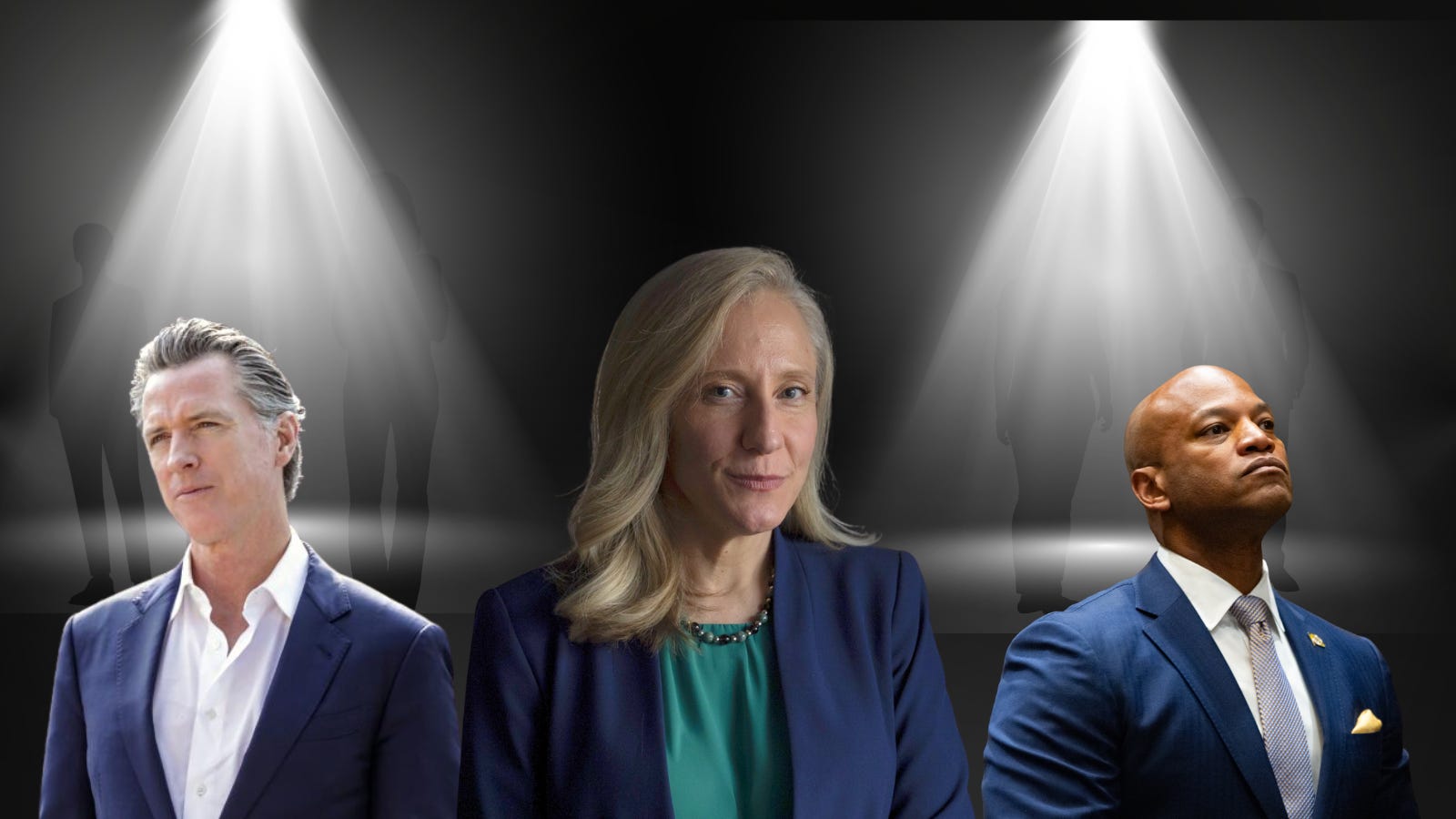
The Democratic proponents of redistricting felt a devastating blow on Friday when the Supreme Court of Virginia handed down a 4-3 decision overturning the results of the special referendum election, stating that the procedure used by the Virginia General Assembly to pass this Constitutional Amendment was, ironically, unconstitutional. Their reasoning was that Democratic Leadership’s definition of an “intervening election” did not fit SCOVA’s definition, as “voting had already commenced” for the 2025 election by the time the special session was called.
And of course, the response was predictable. Ridicule and gloating from the Right were all over X, despite them not conceding the fact that they did in fact lose an election, but it was only when the referees intervened and handed them the game that they were “triumphant.” Kind of an asterisk if you asked me.
Then came all of the “what you guys should be doing” from Democrats and allies from all over the country. A lot of people were pressuring Governor Spanberger to just “do it anyway” because “that’s what the Republicans would do.” Many were chastising Virginia Democrats for giving up so easily when the decision came in, even after Virginia Democrats had spent the better part of their holiday season and the beginning of 2026, when most people were either resting or preparing for the midterms, focusing on this snap election.
The one proposal that caught fire was from Quinn Yeargain in the Downballot newsletter and it spread quickly. Yeargain proposed that the Democrats in Virginia should lower the retirement age of Supreme Court Justices in Virginia to 54 which would then force all 7 of the current sitting justices to retire and the Democratic General Assembly could appoint 7 new justices who would vote in the proposed maps anyway.
This proposal was so appealing to Democratic Speaker of the House hopeful Hakeem Jeffries that he called members of the Virginia Congressional Delegation to tell them it should be the plan moving forward. Jeffries was so adamant that Democrats should do whatever they could to get this across the finish line and protect our democracy that this was a necessary action on their part.
You know who all of these people forgot to ask? Virginia State Democrats.
Governor Spanberger, who would need to sign off on this lowering of the age, was not briefed or consulted beforehand. Speaker of the House Don Scott was not consulted by Jeffries or anyone else pushing this narrative in the open, and he would have to lead the effort to appoint replacements for these justices.
Senate Majority Leader Scott Surovell even said it was not possible, calling the idea “too extreme” and explaining it “would not have time under the current system used at the Department of Elections, to make the changes.” He said he wants to work within the current legal system to do these kinds of things.
But the biggest takeaway was this: Virginia Democrats answered the call to action when they saw what was happening in Texas and Missouri and what was bound to happen in other states. They took the risk to push back when the rest of the country was watching to see if anyone would. They knocked doors in February. They cut ads. They sat through committee hearings on a constitutional amendment most voters had never heard of three months earlier. They lost a 4-3 decision that turned on a procedural definition of “intervening election” that most of the people now demanding action have never read.
And then on Monday morning, the calls started coming in from people who had not made a single one of those phone calls themselves.
The states that didn’t show up are loud now.
Here is the part nobody wants to say out loud: Virginia and California were alone.
California has a Democratic trifecta. Newsom called a special election to redraw maps and the voters approved it. They proved they could do it. Maryland has already started the process in their Democratic trifecta.
New York has a Democratic trifecta. Illinois has a Democratic trifecta. Massachusetts. Washington. Oregon. Colorado. New Jersey. Delaware. Connecticut. New Mexico. Minnesota. Every one of these states had the legal architecture and the political majorities to respond to what Texas and Missouri did. Most of them did nothing. A few made noise about studying it. None of them put a constitutional amendment on the ballot in the middle of an election year and asked their voters to expand the legislature’s redistricting power.
Virginia did.
Virginia lost on a 4-3 procedural ruling that turned on whether early voting for the November 2025 general election had “commenced” by the time the General Assembly called the special session. That is the entire ballgame. Not the substance of the maps. Not the fairness of the process. Not the will of the voters who approved the amendment in April. A definitional question about the word “commenced.”
And now Hakeem Jeffries, who represents Brooklyn, wants to call the Virginia Delegation and ignore the state level Democrats who actually have insight and authority over this process.
Rep. Suhas Subramanyam, to his credit, said publicly that Democrats need a strong stomach right now. He is right about that. He is also a member of Congress, not a member of the Virginia General Assembly, and the people who would actually have to pass the bill, sign the bill, defend the bill in court, and appoint the replacement justices were not the ones on those Monday morning calls.
The Virginia officials who would have to execute this plan said no. Not because they are timid. Not because they lack a strong stomach. Because they spent the last six months actually doing the work and they understand, in a way that someone calling from a New York office does not, what it costs to do this twice.
“That’s what Republicans would do” is not a strategy.
The loudest argument for the Yeargain proposal was that Republicans would do it. That is true. Republicans absolutely would lower a retirement age to clear a court they did not like. Republicans absolutely would ignore precedent, fire the referee, and walk off with the trophy.
That is not a recommendation. That is a description of the problem.
The argument that Democrats should match Republicans procedural-norm-violation-for-procedural-norm-violation assumes that the only thing keeping the system upright is which team is willing to pull the load-bearing wall down first. It is the political equivalent of a hostage situation where the proposed solution is for the hostages to take their own captives.
And it is being made, almost exclusively, by people who do not have to face the voters who would have to live with the precedent.
Don Scott has to face Portsmouth in 2027. Surovell has to hold a Senate majority that runs through Loudoun, Prince William, and Henrico, where the suburban voters who delivered the April amendment by three points are the same voters who will decide whether “Democrats will not destroy the courts to win” is a credible message in 2026 and 2027. Spanberger does not run again — Virginia is the only state in the country that limits its governor to a single term — but every Democrat who wants her seat in 2029 does, and the precedent she signs becomes the precedent they have to defend.
Jeffries, if he becomes Speaker, will face a national midterm where the median voter has never heard the words “Stephen McCullough” and never will.
These are different jobs. They require different calculations. The Virginians making the calculation are the ones whose names go on the ballot.
What the people calling forgot.
The Yeargain proposal, on its analytical merits, is a serious piece of work. Quinn Yeargain is one of the sharpest election-law writers in the country and The Downballot is one of the few publications still doing real structural reporting on state-level democracy. The proposal identifies a real legal mechanism. It identifies the right justice (McCullough, the youngest in the 4-3 majority, currently 54). It walks through the implementation. Read it. They did the work.
The proposal is not the problem.
The problem is the gap between a newsletter post on Friday and a national Speaker-hopeful putting it on a phone call on Monday morning, without making one of those phone calls to the people who would have to do it.
There is a name for this in every functional political operation in the country: it is called freelancing. And the reason functional operations do not tolerate it is that the consequences of a freelanced strategy do not land on the freelancer. They land on the governor who has to veto, the speaker who has to whip, and the senate leader who has to explain to his caucus why they spent a week defending a proposal they were never asked about.
Virginia spent six months building a coalition to expand fair maps. That coalition included CleanVA, the unions, every constitutional officer who put their name on the line, and 51% of the voters who showed up in April to approve the amendment in the middle of an off-year cycle most pundits had already written off.
The Supreme Court of Virginia overturned that work on a definition of “commenced.”
The right response is not to overturn the court. The right response is to make sure the next coalition is bigger, the next amendment is procedurally airtight, and the next time someone in another state is asked to match Virginia’s effort, they actually do it.
Where the good guys are.
The title of this piece is a question because it is the question I keep getting asked. Where are the good guys? Where is the cavalry? Why is it always Virginia, always Lucas, always Scott, always Spanberger, always the same handful of people doing the work while everyone else watches and grades it on a curve afterward?
The good guys are in Richmond. They are in Norfolk and Charlottesville and Arlington and Roanoke. They are the volunteers who knocked doors in February for a constitutional amendment most of them could not explain in one sentence. They are the General Assembly Democrats who took the vote knowing it could fail and took it anyway.
The good guys are also the ones who, on Monday morning, said no to a plan that would have made every future Republican attack on Democratic norm-violation easier to land. They said no because they have to live in the state after the cameras leave.
Show up before you give advice. Knock the doors. Cut the checks. Call your own governor before you call somebody else’s. And when a state with a Democratic trifecta loses a 4-3 ruling on a definition of “commenced,” do not show up on day three with a proposal that requires that same state to do the next round of work alone.
Virginia did the work. The rest of the country owes Virginia something more than a phone call about what to do next.
They’ll remember who showed up. They’ll remember who didn’t.
TL;DR
The Supreme Court of Virginia overturned the redistricting amendment 4-3 on a procedural definition of “intervening election,” not on the substance of the maps.
Quinn Yeargain in The Downballot proposed lowering the mandatory judicial retirement age to 54 to force the majority off the court. Hakeem Jeffries adopted the proposal on Monday morning calls to Virginia members of Congress.
Spanberger was not briefed. Don Scott was not consulted. Surovell called the idea “too extreme” and said the Department of Elections cannot execute it in time anyway.
Subramanyam supported the plan. He is the exception, not the consensus, and he is not the one who would have to execute it.
Virginia is the only Democratic-trifecta state that actually built and ran a redistricting response in 2026. California ran their own and won. Every other Democratic trifecta did nothing.
The argument “Republicans would do it” describes the problem, not the solution. Spanberger cannot run again — Virginia is the only state with a one-term limit on its governor — but Don Scott faces Portsmouth in 2027, Surovell has to hold a Senate majority through the same suburbs that delivered the April amendment, and the next Democrat to want the Governor’s Mansion will inherit whatever precedent gets signed this winter.
Show up before you give advice. Virginia did the work. The next time someone needs help, the people who spent April knocking doors for a constitutional amendment they did not write should not have to do it alone.
What you wrote is all well and good. But the bottom line is the Republicans won. They beat back the Virginia initiative while they are merrily redistricting away. I dont think resting on our laurels about how we did it right is the answer at this point. We have to start doing WHATEVER it takes to get the ball across the goal line. If Democrats don't win the next couple of national elections there may not be any more. Bringing a knife to a gunfight is not a winning strategy.
And the ruling was correct because the richmond leaders wanted to sneak the amendment past voters by passing it on halloween after one million people voted then they dared the court to challenge it after the election. The court called their bluff.